







LOS ANGELES — Southern California is heading into what forecasters expect to be one of the hottest stretches of the year, with temperatures climbing sharply Tuesday and potentially reaching 110°F or higher across inland communities.
The National Weather Service has issued or maintained heat-related alerts across large portions of Southern California, with an Extreme Heat Warning scheduled from Tuesday through Friday for several Inland Empire and San Diego County areas. Some desert communities could see temperatures between 110°F and 117°F, while parts of Los Angeles County could approach or exceed 110°F.
The timing is particularly important for residents because the hottest conditions are expected to build after Monday, meaning the most dangerous part of the heat wave is still ahead.
When Will the Heat Peak?
Forecasters expect temperatures to rise significantly beginning Tuesday.
The National Weather Service has an Extreme Heat Watch from Tuesday morning through Friday evening for parts of Los Angeles County, including the Antelope Valley, where temperatures could reach 112°F.
The Los Angeles Times reported Sunday that the National Weather Service expects Tuesday through Friday to bring the most intense heat of the week, with valley temperatures potentially reaching 100°F to 110°F.
That means residents should not assume Monday’s conditions represent the worst of the event.
The hottest days are expected later in the week.
Which California Areas Will Be Hottest?
The heat will not be evenly distributed across Southern California.
Inland Empire
The National Weather Service has an Extreme Heat Warning from Tuesday through Friday for the San Bernardino and Riverside County valleys.
Temperatures could reach approximately 110°F in the hottest locations.
Communities affected include areas around:
- Riverside
- San Bernardino
- Ontario
- Fontana
- Corona
- Moreno Valley
- Rancho Cucamonga
San Diego County
Parts of San Diego County are also facing dangerous heat.
The National Weather Service expects temperatures approaching 109°F in some inland valleys, while desert areas could become substantially hotter.
Coastal communities will be cooler, but even there temperatures are expected to rise into the 80s and 90s.
Coachella Valley and Desert Communities
The most extreme temperatures are expected in the deserts.
The National Weather Service has an Extreme Heat Warning covering the Coachella Valley, San Diego County deserts and the San Gorgonio Pass near Banning.
Forecast temperatures range from approximately 110°F to 117°F, with unusually warm overnight temperatures providing limited relief.
That includes communities such as:
- Palm Springs
- Palm Desert
- Rancho Mirage
- La Quinta
- Indio
- Cathedral City
- Coachella
- Borrego Springs
What About Los Angeles?
Los Angeles will experience a sharp increase in temperatures, although coastal neighborhoods will remain considerably cooler than inland valleys.
The National Weather Service currently has a Heat Advisory through Tuesday morning, followed by an Extreme Heat Watch from Tuesday through Friday for parts of Los Angeles County.
Downtown Los Angeles is forecast to remain in the mid-to-upper 90s during the hottest portion of the week, while inland valleys could reach triple digits.
The difference can be substantial.
A resident near the coast may experience temperatures in the 80s while someone only a few dozen miles inland could face temperatures above 105°F.
Why Is This Heat Wave So Intense?
Forecasters point to a strong area of high pressure aloft.
That setup promotes compressional warming, causing air to warm as it sinks toward the surface.
The weather pattern is also expected to bring more northerly winds into portions of Southern California, adding another factor that can push temperatures higher.
The result is a combination of:
- Strong high pressure
- Hot inland air
- Very warm overnight temperatures
- Low humidity in some areas
- Limited nighttime cooling
- Persistent heat lasting several days
That duration is important.
A single hot afternoon is very different from several consecutive days of extreme temperatures.
Why Are Warm Nights a Problem?
One of the biggest concerns is that temperatures may remain unusually high overnight.
The National Weather Service says overnight temperatures in the desert areas could remain 5 to 8 degrees above normal, limiting the amount of cooling people receive after sunset.
That can make prolonged heat more dangerous because homes, buildings and vehicles may not cool down sufficiently before the next day’s temperatures begin climbing again.
For people without reliable air conditioning, several consecutive hot nights can be particularly challenging.
Could Temperatures Break Records?
Some areas could approach or challenge daily temperature records.
The San Francisco Chronicle reported Monday that the current heat wave has the potential to produce record-breaking temperatures in portions of Southern California, with inland areas potentially reaching 110°F and desert communities exceeding that level.
However, not every location will set a record.
The greatest concern is the breadth and duration of the heat, with unusually high temperatures expected across a large portion of Southern California.
Why the Heat Matters for California’s Wildfire Risk
The heat wave is also arriving while California continues dealing with active wildfire conditions.
Hot, dry weather can rapidly remove moisture from vegetation, potentially making fuels more receptive to fire.
The Los Angeles Times noted that Southern California has a history of major fires during periods of extreme heat, even when Santa Ana winds are not present.
That does not mean the heat wave itself will automatically cause wildfires.
But extreme heat can make an already difficult fire environment more challenging, particularly when combined with dry vegetation, low humidity and wind.
That is especially relevant while the Timber Fire continues burning in Monterey County.
Is the Entire State Getting Hit?
No.
Southern California is facing the most significant heat concerns, while conditions are considerably more moderate in the Bay Area and some coastal Northern California locations.
The San Francisco Chronicle reported that the Bay Area is expected to see more typical summer conditions, with coastal temperatures generally in the 60s and 70s and inland areas reaching the 90s.
That means California residents should pay attention to local forecasts rather than statewide temperature headlines.
The difference between coastal San Diego and the Coachella Valley, for example, could be enormous.
What Does an Extreme Heat Warning Mean?
An Extreme Heat Warning is more serious than a routine heat advisory.
It means dangerously hot conditions are occurring or expected and that heat-related illness can become a significant threat.
The National Weather Service advises people to:
- Drink plenty of fluids
- Stay in air-conditioned spaces when possible
- Avoid prolonged exposure to direct sun
- Check on relatives and neighbors
- Avoid strenuous activity during the hottest part of the day
- Take extra precautions for people who are particularly vulnerable to heat
The agency specifically warns that heat-related illness increases significantly during extreme heat events.
What About Outdoor Workers?
The heat wave is particularly important for people who work outside.
California’s workplace heat rules require employers to provide protections designed to prevent heat illness, including access to water, shade and appropriate rest opportunities.
Those protections become especially important when temperatures climb into the triple digits.
Construction workers, landscapers, agricultural workers, delivery workers and other outdoor employees can face prolonged exposure during the hottest hours of the day.
What Should Southern California Residents Do?
The most important step is to plan before the hottest temperatures arrive.
Residents should consider:
Check your local forecast.
Temperatures can vary dramatically between nearby communities.
Make sure air conditioning is working.
Don’t wait until Tuesday afternoon to discover that a cooling system isn’t functioning properly.
Keep water available.
Stay hydrated throughout the day.
Limit strenuous outdoor activity.
Especially during the afternoon when temperatures peak.
Check on vulnerable neighbors and relatives.
Older adults, young children and people without reliable cooling can face greater risks during prolonged heat.
Never leave children or pets inside parked vehicles.
Even relatively short periods can become dangerous.
When Will the Heat Finally Ease?
Some relief is expected after the peak of the event, but the current forecasts indicate that the heat could persist through Friday, particularly inland and in desert areas.
The National Weather Service’s current Extreme Heat Warning for parts of Southern California runs through 8 p.m. Friday, August 28.
That means residents should prepare for a multi-day heat event, rather than treating this as a one-day temperature spike.
The California Cities Facing the Biggest Heat
Based on current National Weather Service alerts and forecasts, some of the areas most likely to experience extreme conditions include:
| Area | Expected concern |
|---|---|
| Palm Springs / Coachella Valley | 110°F–117°F |
| San Bernardino & Riverside valleys | Up to around 110°F |
| Inland San Diego County | Upper 90s to around 109°F |
| Antelope Valley | Up to around 112°F |
| Inland Orange County | Mid-90s to around 104°F |
| Coastal Orange County | Mid-80s to lower/mid-90s |
| Downtown Los Angeles | Mid-to-upper 90s |
Forecasts can change, so residents should check the National Weather Service for their specific location before making plans.
The Bigger Concern: Heat + Fire + Long Duration
This week’s weather event comes at a challenging time for Southern California.
The region is dealing with elevated wildfire concerns while temperatures are expected to remain unusually high for several days.
The combination means residents should pay attention not only to heat warnings but also to local wildfire conditions, air quality and evacuation information if they live near an active fire.
Extreme heat can also increase demand for electricity as residents run air conditioning for longer periods.
That makes preparation particularly important as the hottest days approach.
The Bottom Line
Southern California is heading toward a major heat event, with the National Weather Service warning of dangerously high temperatures from Tuesday through Friday across several inland and desert regions.
The hottest locations could reach 110°F to 117°F, while parts of Los Angeles County could approach 112°F.
Coastal communities will be cooler, but temperatures will still rise significantly.
The key message for Californians is simple:
The worst of this heat wave is still ahead.
If you’re in Southern California, check your local forecast, prepare your home for several hot days and avoid assuming that conditions near the coast will reflect temperatures just a short distance inland.
Official Weather & Safety Links
National Weather Service — Los Angeles/Oxnard: NWS Los Angeles Weather Alerts
National Weather Service — San Diego: NWS San Diego Weather Alerts
National Weather Service — Heat Safety: NWS Heat Safety Information
Latest California heat coverage: San Francisco Chronicle — Southern California heat wave
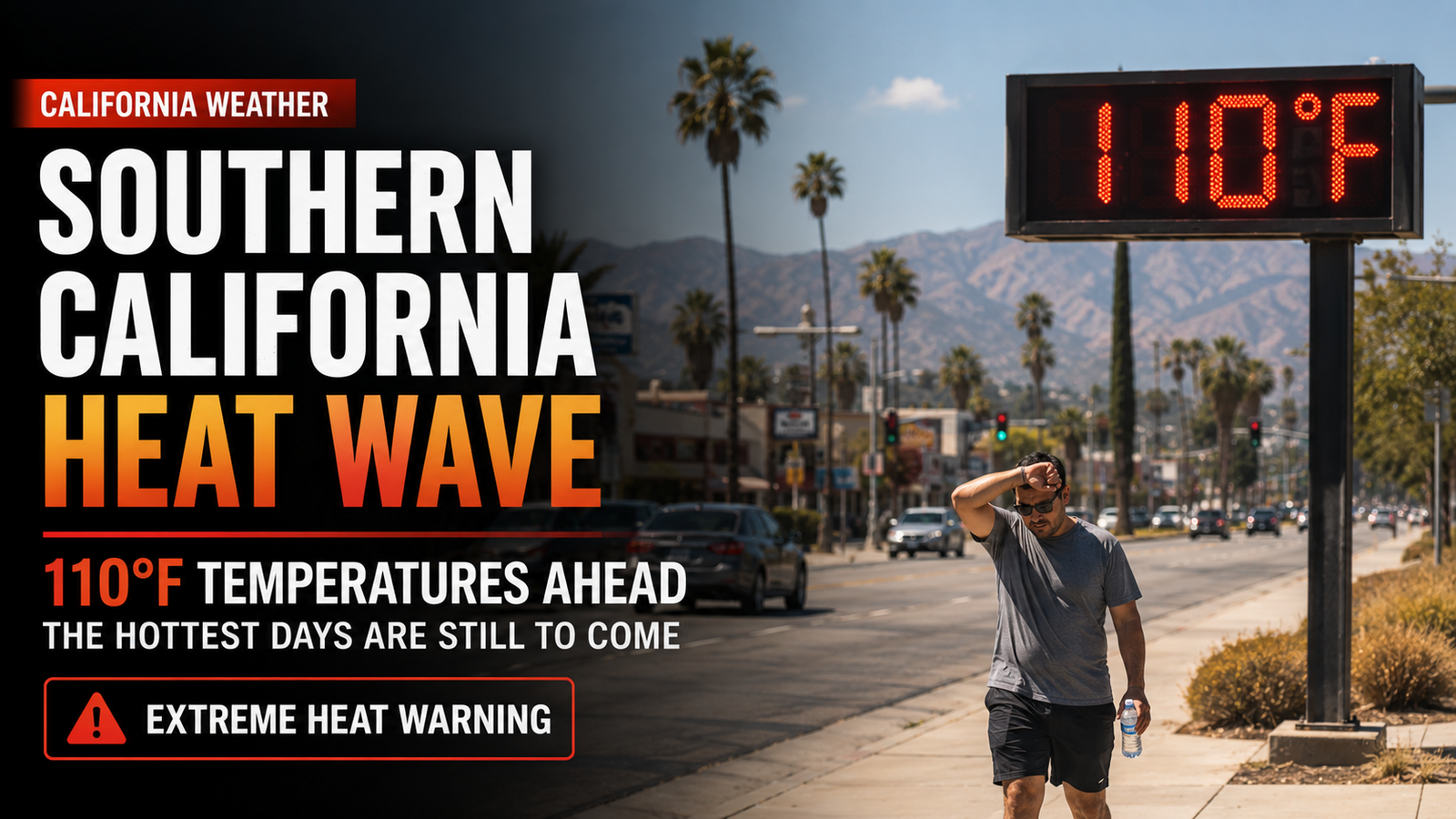
AI Image Disclosure
Image Disclaimer: The featured image in this article was generated using artificial intelligence (AI) for illustrative and editorial purposes. It does not depict an actual temperature reading, weather event, person, location or emergency scene.